
What changed for free ChatGPT users with GPT-5.6 Luna?
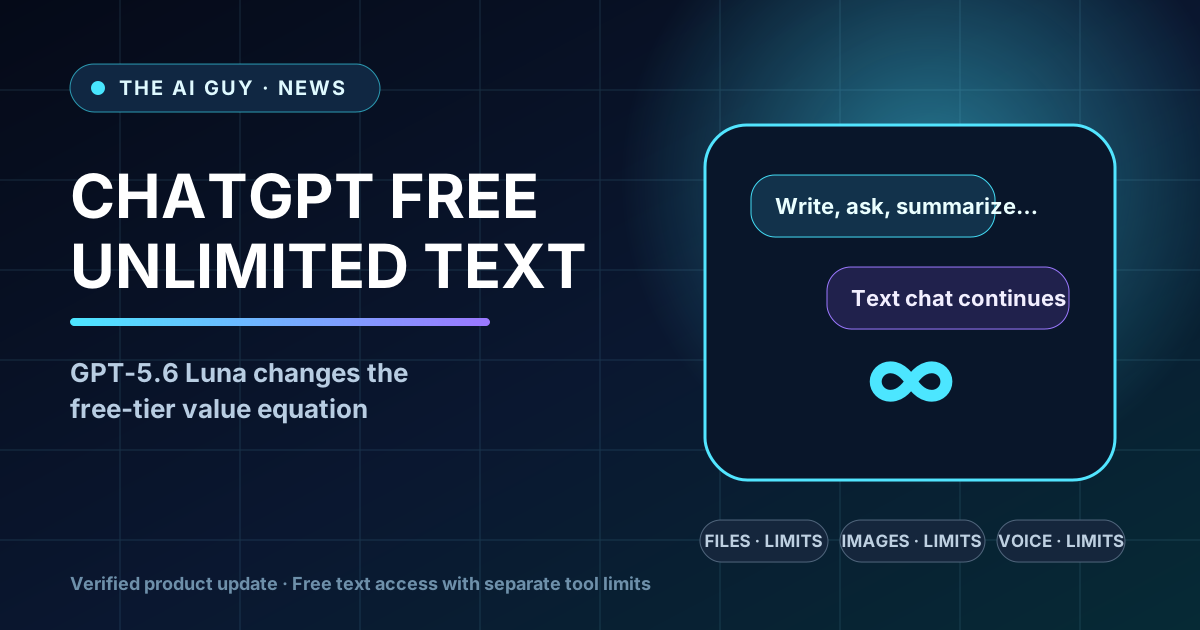
OpenAI says GPT-5.6 Luna will become the default model for ChatGPT Free and Go users this week. Starting next week, those users are set to get unlimited text chats and a Think button for harder questions, subject to abuse guardrails. The practical takeaway is simple: free ChatGPT is worth retrying for routine text work, but files, images, voice and other tools still have separate limits.
What OpenAI announced
OpenAI's August 6 update says GPT-5.6 Luna will become the default model for ChatGPT Free and Go users this week. Starting next week, those users are also set to get unlimited text chats and a Think button for harder questions, subject to abuse guardrails. OpenAI's RSS summary describes the change as expanded free access and unlimited everyday chats with GPT-5.6 Luna.
What still has limits
This is not an everything-is-unlimited change. OpenAI says limits will still apply for file uploads, images and other tools. TechCrunch also reported separate limits for files, images, voice and image generation. For AI-tool users, that means the free tier may now cover more routine writing and Q&A, while media-heavy or tool-heavy workflows still need checking inside the account.
What changes for paid users
Plus and Pro users get an updated GPT-5.6 Sol in ChatGPT and a slider for choosing how much thought ChatGPT puts into an answer. OpenAI says this ChatGPT Sol update is for everyday chats and does not change the GPT-5.6 Sol version used for Work and Codex. Keep those products separate when comparing workflows.
Confirmed vs not confirmed
Confirmed: Free and Go users move to GPT-5.6 Luna as the default model this week; unlimited text chats and the Think button start next week; abuse guardrails and separate tool limits still apply. Not confirmed here: exact account-level rollout timing, unlimited files or images, unlimited voice, no practical caps under heavy use, or any claim that Luna is better than paid or competing models.
Quick decision rule
Use free ChatGPT first when the task is text-only, low-risk and easy to verify: drafting, brainstorming, summarizing pasted text or ordinary Q&A. Consider a paid plan when the workflow depends on files, images, voice, collaboration, connectors, advanced model access or reliable capacity during important work.
The bottom line
This is a meaningful free-tier access update for everyday text work. It does not remove every reason to pay for ChatGPT or use specialist AI tools, but it raises the bar for what casual users can try before upgrading.
Related tools and pages
Official sources
- OpenAI product update ↗Checked 2026-08-07
- TechCrunch independent report ↗Checked 2026-08-07
This is researched analysis based on public product information. The AI Guy has not independently benchmarked the feature described here.
FAQ
Are free ChatGPT text chats already unlimited?
OpenAI says unlimited text chats for Free and Go users start next week, subject to abuse guardrails. Do not assume every account has the change before rollout appears in the account.
Does unlimited text mean unlimited files, images or voice?
No. OpenAI says separate limits still apply for file uploads, images and other tools, and TechCrunch reported separate limits for files, images, voice and image generation.
Does this update change Codex or ChatGPT Work?
OpenAI says the GPT-5.6 Sol version used for Work and Codex is not changing as part of this ChatGPT release.
More News & Guides
Google AI Mode Changes SEO: How AI Tool Sites Can Still Get Cited
AI searchGoogle's AI answers reduce traditional clicks, but they also create a new opportunity: become the source the answer engine cites.
Read guide →
How to Build an LLM Council for Better AI Decisions
AI workflowA practical framework for comparing answers from multiple AI perspectives before making a high-stakes business, product, or strategy decision.
Read guide →
Best AI Presentation Maker Questions to Ask Before Choosing a Tool
AI presentationsBefore choosing Gamma, Canva, Tome, Beautiful.ai, or another AI presentation tool, ask these practical selection questions first.
Read guide →